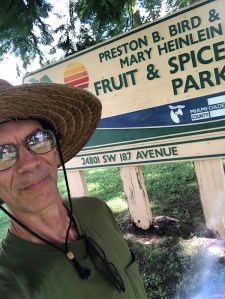
One of the best collections of tropical fruit trees anywhere is in Homestead, Florida, at the southern tip of the Florida peninsula. It’s the Fruit and Spice Park, a 37 acre collection of tropical fruit trees where the public is invited to sample the bounty. You are welcome to take home seeds of the fruits you eat, allowing you to start your own trees of of many of these rare species.
I’ve written before about my love for this place, which is such a wonderful resource for anyone interested in food that grows on trees. I hope to encourage more people to visit this treasure. Since there are different fruits in season at the park at different times of year, it might be helpful for prospective visitors to know what they can expect, to help them plan their visits. So I am going to start posting a list of fruit species ripe I encounter whenever I visit FSP.
My most recent visit was on September 27, 2025, so this should give a bit of idea of what you might find to sample at that time of year. Ideally it’s best to have a full day at least to explore the park, but we only had 3.5 hours. We were able to sample 24 species of fruit during that time (which works out to one fruit species every 8.75 minutes). Undoubtedly we missed quite a number of species with ripe fruit. And we saw many, many more trees with fruits in various stages of development, but which didn’t have any fruits ripe and ready to sample. Here are the fruits we actually got to eat.
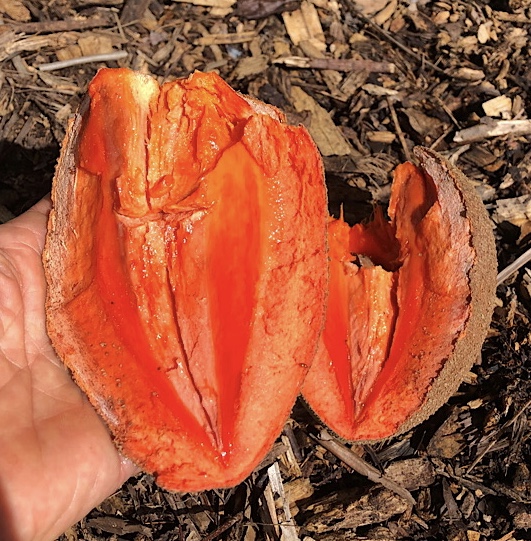
Mamey sapote (Pouteria sapota) We arrived first thing after opening, and found a dropped mamey fruit in the Sapotaceae grove. It was excellent.
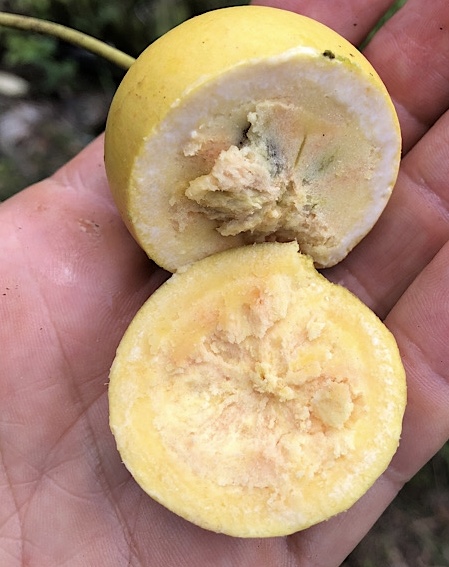
Mimusops balata Also in the Sapotaceae grove near the park’s entrance. Fruits have a smallish amount of flesh that’s dry and cake-like, a bit like a really dry canistel. Not a top tier fruit, but I find them pleasant to eat.
Sapodilla (Manilkara sapota) I think winter is prime season for “saps”, but we found a single out of season fruit that had dropped. It was perfectly ripe and delicious. The usual description of this fruit is it tastes like a pear with brown sugar, but to me a really good one can taste like apple pie. The one we had was kind of in between.
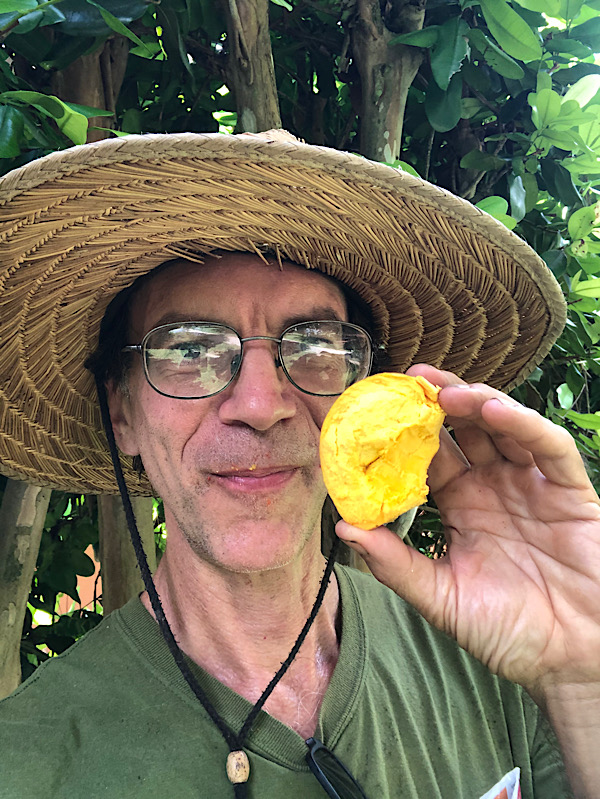
Canistel (Pouteria campechiana) My favorite fruit, I’ve spent many happy hours in that Sapotaceae grove at FSP enjoying what I call the pumpkin pie cheesecake fruit. Like sapodilla, prime season for canistel is in winter, but we found one tree labeled “Seedling” that was near the herb garden, next to the curry leaf plant, which had dropped several ripe fruits in late September. They weren’t the absolute top quality canistels I’ve gotten here during winter, but they were still pretty good.
Acerola (Malpighia glabra) This shrub/tree had a few ripe fruits dropping. To me this is kind of a minor fruit, pleasant but not something to get excited about. A bit cherry like, the fruit has a large seed. One person with me detected notes of sweet pepper in these.
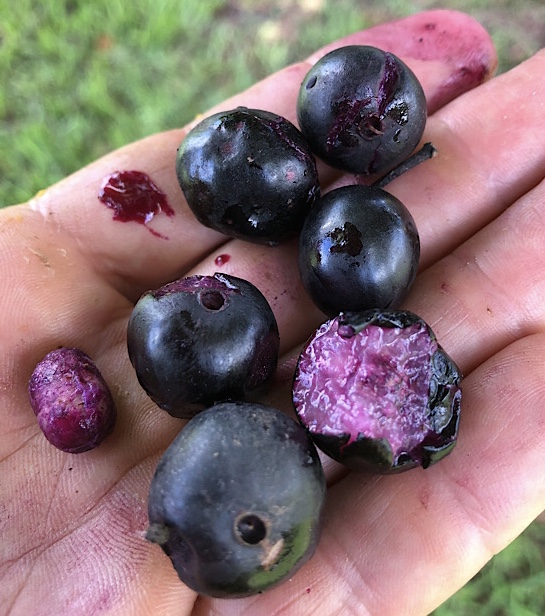
Rumberry (Myrciaria floribunda) I’d seen the name of this species for years, this was the first time trying it, and I was extremely impressed. Deep purple skinned fruits have purplish flesh, and with tastes like plum and grape and berries, sweet tart and with a bit of astringency which I didn’t find unpleasant at all. The tree was loaded, dropping fruits all over the ground. The skin is quite fragile, so we were getting purple stained fingers picking these up. From what I’ve read it sounds like this species is quite variable, and the one at FSP might be an especially good form.

Abiu (Pouteria caimito) I was excited to try this one, since I’d heard it spoken of so highly by fruit connoiseurs. I liked it but didn’t love it, while it got mixed results from others who sampled. One person said they found it ambrosial. Abiu reminded me of star apple, Chrysophyllum cainito, with a kind of gelatinous texture, moderately sweet with flavor elements dancing in the background. Some of the fruits had notes of caramel, others were more like marshmallow. Definitely juicy and refreshing. I don’t know if the two trees fruiting at FSP are top quality cultivars or lesser quality seedlings of abiu.
Coffee (Coffea sp) The plants near the Tropical American greenhouse had a few ripe berries on them, dropping on the ground. While the seed is what’s roasted to make the beverage, coffee fruits actually have a pretty good tasting fruit surrounding that seed. Tastes vaguely like a cherry.
Ginberry (Glycosmis pentaphylla) A distant relative of citrus from Southeast Asia, ginberries have a sweet tart berry with a large seed in them. They have a distinctive flavor which reportedly resembles gin (I’m not sure if I’ve ever had gin so I can’t verify). I’ve always considered this one kind of a minor novelty fruit, but we encountered a pair of visitors at the park who were very enthused about how good they thought this one was. So your mileage may vary.
Carambola (Averrhoa carambola) There were a few ripe fruits under the carambola trees so we got to sample. I’m not sure I’ve ever gone to FSP when there weren’t at least a few carambolas to sample. Quite a number of people have told me this is their favorite fruit.
Cas, Cattley and Tropical Guava (Psidium friedrichsthalianum, P. cattleyanum, and P. guajaba) These three guava species all had ripe fruits dropping. Cas guava is quite tart but has a nice fruity flavor. Its thick skin makes it resistant to Caribbean fruit fly. The yellow Cattley guava fruits we found under the tree mostly had little fruit fly larvae squirming in them, which I think is particularly a problem during the warmer months with this fruit. The tropical guava fruit we found under the tree was excellent, and was free of larvae. It seemed to have a thicker skin than most tropical guavas, which might have kept out the fruit flies.

Olosapo (Couepia polyandra) Olosapo is a fruit that’s come on my radar just in the last few years. People described it as being like canistel but sweeter and more candy-like. Being such a fan of canistel, I had to try this one. There were a few fruits under the olosapo tree, same as when I was last at the Park in March. Fruits are elongated with a large seed, so not a huge amount of flesh, but it is really quite good. The partially mature fruits tasted kind of like a cooked Delicata squash, sweet and dry. The fully mature fruits tasted like the same cooked squash but more moist, intensely sweet with notes of caramel and orange juice mixed into the squash. Almost candy like. So far this fruit hasn’t quite outdone canistel in my mind, but it’s definitely a very exciting one.
Sea Grape (Coccoloba uvifera) The sea grape bushes had berries ripe, dropping on the pathway. I’m not sure if these were falling off a little prematurely. I thought the fallen fruits looked unappetizing but tasted surprisingly good.
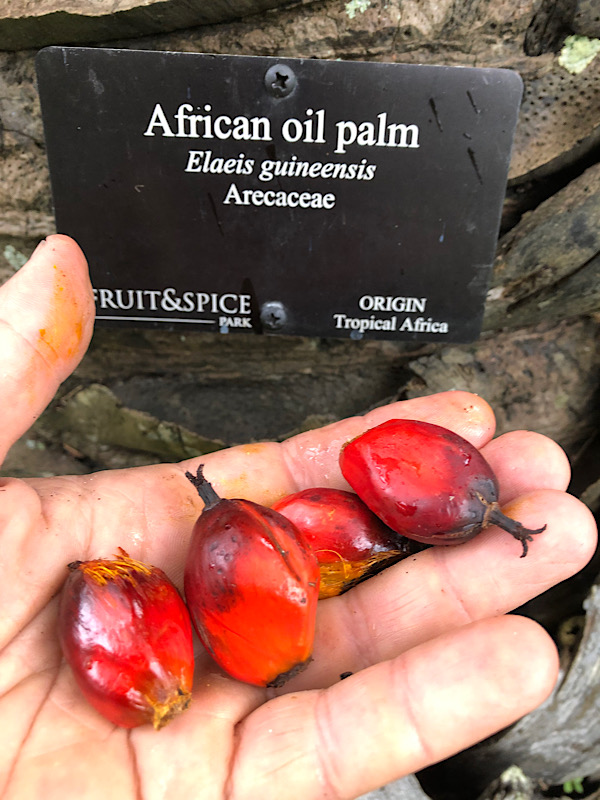
African Oil Palm (Elaeis guineensis) I learned earlier this year from a friend who had lived in Gana in West Africa that you can eat the fruits of African oil palm right off the tree (or as they drop off). The bright red fruits have a fibrous oily outer layer, nibbling on that releases a delicious rich oily liquid into your mouth, and you spit out the fibrous residue. My friend said that in Gana they make a soup from the fruits. The kernels also contain oil, but that requires some equipment to extract. Now whenever I visit FSP, I check for fruits under the African oil palms to nibble on. (note: this species has gotten a bad reputation due to people clearing rain forest to plant this species in monoculture plantations. But the tree itself is a tremendously productive species that could have a huge role to play in sustainable tropical agriculture.)

Fingersop (Meiogyne cylindrocarpa) There were lots of ripe fruits on the fingersop bushes, many dropping on the ground. Looking like small, bright red pawpaws, the fruits are actually related to our North American pawpaws, sharing a last common ancestor probably back in dinosaur times. To me this is an interesting novelty fruit, but not something I feel inclined to eat a lot of.
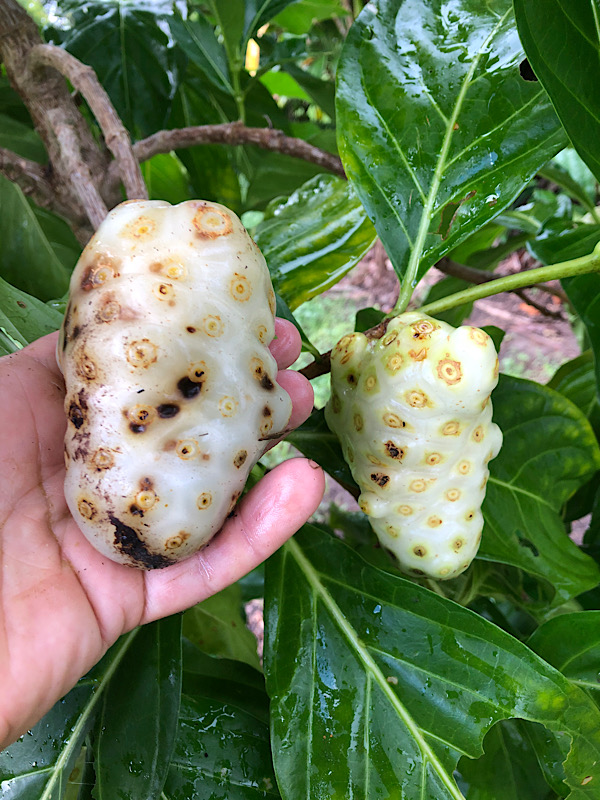
Noni (Morinda citrifolia) Noni is one fruit I just have never been able to develop an appreciation for. I know some people claim they like it, but to me this fruit smells and tastes like rotten cheese. Maybe my palette is uneducated, or maybe noni is is just gross. It’s at least entertaining to take a nibble, and appreciate what diversity the plant world has to offer. There were lots of ripe noni fruits dropping on the ground.

Avocado (Persea americana) Avocado season seemed to be just starting when we visited FSP in late September. The trees had lots of hard unripe fruits, and a few that had dropped to the ground. Most of the drops that I sampled tasted watery and bland, typical of early season drops, but I found a couple that were fair tasting, and one that was really good. I took it with me as I walked through the park, nibbling as I went. All the trees that had ripening fruits appeared to be West Indies types, the big, smooth skinned avocados common in South Florida and the Caribbean.
Mulberry (Morus sp.) Several of the trees in the mulberry collection had ripe fruits when we visited in late September. We got to try long fruited types of both the dark purple and white varieties. I’m not going to list the variety names because the labeling on the park’s mulberry collection needs some revision, and hopefully in the future there will be labels better reflecting the actual varieties.
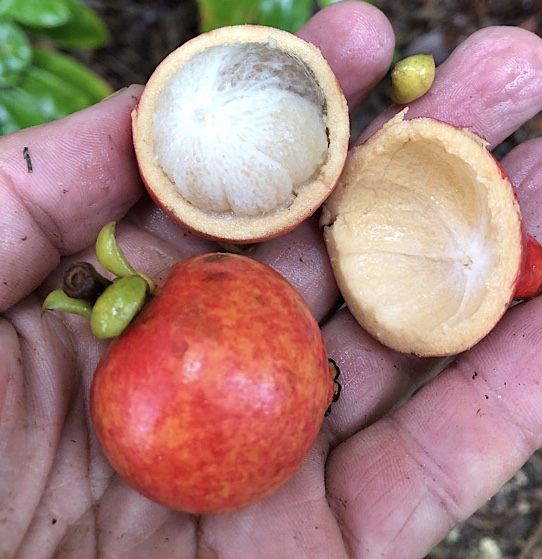
Seashore mangosteen (Garcina celebica) This cousin of the more famous purple mangosteen is better adapted to South Florida conditions than its cousin. I’ve also seen the name Garcinia hombroniana and G. benthamii for seashore mangosteen; I’m not sure if all these are synonyms for the same species, or if different species have that common name. Fruits of this one are bright red on the outside, and if you cut open the outer shell, there’s a ball of tangerine-like segments inside, much like in purple mangosteen. They were pleasant, sweet tart and fruity, one person trying them said they taste “like sour Skittles”.
American and Asian persimmon (Diospyros virginiana and D. kaki) Both species had ripe fruits we were able to try. The American tree was a small fruited type, smaller than some of the named varieties, but they were sweet and tasty.
Dragonfruit On our way out, staff at the front desk offered us chunks of a red dragonfruit that had been grown in the park. We’d missed seeing the plant due to our time constraints, but appreciated getting to taste its fruits. They were visually spectacular, with deep purple color. Flavor was like most dragonfruits I’ve had, good but not spectacular.
 Florida Fruit Geek
Thank you for this list! We’re looking for new fruit trees to plant and these are some new ideas! Do you happen to know the varieties of Persimmons that fruited well?
LikeLike
I didn’t see them labeled with variety names, but I’ve heard ‘Triumph’, ‘Hudson’, and ‘Suruga’ cultivars of Asian persimmon reported to do well in extreme south Florida. Also for more ideas of what to plant check out this post: https://floridafruitgeek.com/florida-fruit-growing-zones/
LikeLike
Hi Craig, I love your post about the Fruit and Spice Park. I was recently very close to the park, almost visited. A group of us from Lewis Ginter Botanical Garden in Richmond, VA, were on a mission to buy plants for our new Tropical and Subtropical Conservatory wings. I got to buy close to 30 different fruit tree varieties. We are very excited to plant them inside in Virginia and see how it goes.
Your post is filled with excellent information and pictures. Thank you for all you do to keep excitement alive for the wild myriad of food plants around us!
LikeLike
Thanks Rebecca, good to hear from you. I took a break from blogging but I’m back. Great to get positive feedback like this. I’m glad you’re working on that project, I love the idea of botanical gardens in temperate regions providing people the opportunity to experience warm-climate plants without having to travel far from home.
LikeLike
Very interesting to read about and see pictures of all the different kinds of fruits. Makes me want to move to Florida! I know I can’t grow very many of those in my state of Arizona.
I did get cuttings from you of the Himalayan Fruit Spice Park Mulberry that you rant and rave about. They’re growing really good and I hope to be able to taste the fruit this coming spring.
I appreciate you putting out articles like this for people to read. Very nice!
LikeLike
Just cruising found this post, nice pictures, great spot brings me lots of memories of my time there many years ago. Enjoy it Cheers
LikeLike
Wow, so many interesting fruits! ❤️
LikeLike
hi, can you complete the pictures for the other plant families? these are some of the best illustrations on internet.
LikeLike